The Impact of Temperature on Pipeline Girth Weld Performance
Understanding Pipeline Girth Welds and Their Importance
Definition of Girth Welds
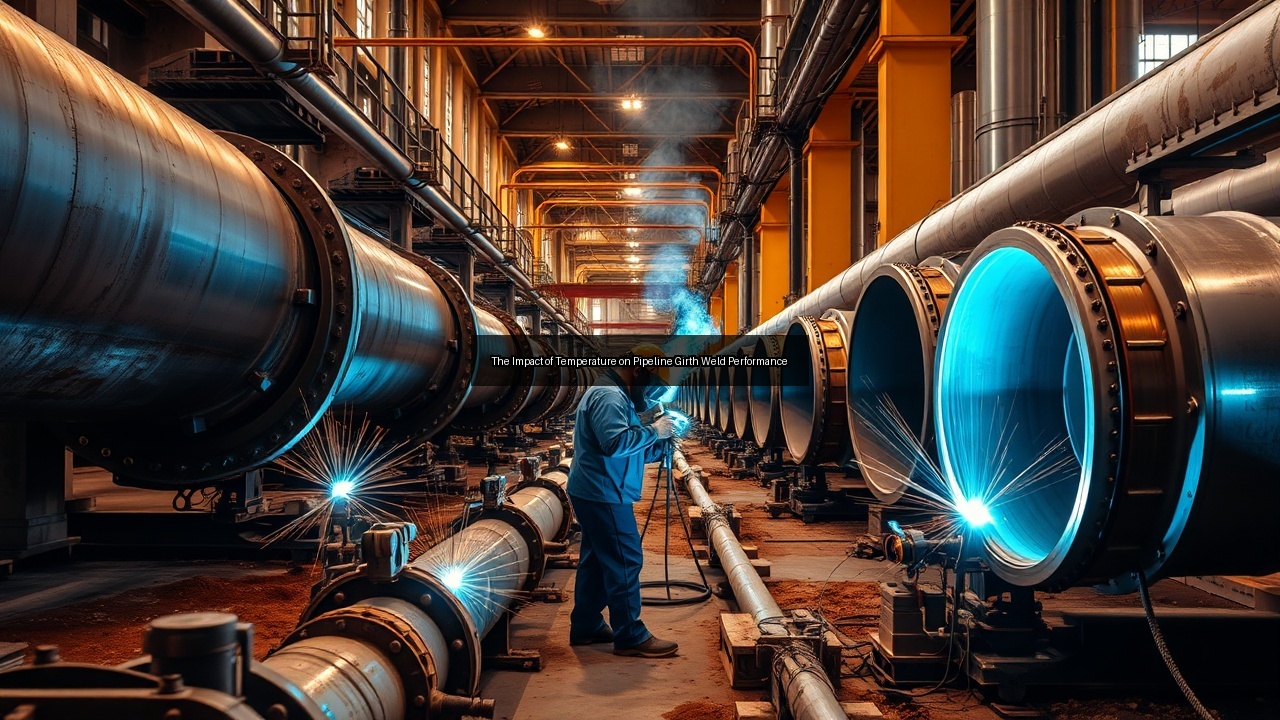
Pipeline girth welding joins sections of pipe end to end in a circumferential seam that runs around the full diameter. Welders complete this process on pipelines during construction to create continuous flow paths for oil, gas, or other fluids. The resulting girth weld must deliver full structural integrity under internal pressure and external loads. Literature on the topic consistently highlights how the root pass establishes the foundation for subsequent layers, while the completed weld resists axial and bending stresses. Temperature during welding directly influences bead shape and fusion quality. Operators monitor conditions closely because even modest variations alter cooling rates and final microstructure. Stainless steel pipes require precise control to avoid sensitization, whereas carbon steel grades tolerate broader ranges yet still demand attention to preheat levels. Every girth weld undergoes review against procedure specifications that define acceptable parameters for the given material and wall thickness.
Role of Girth Welds in Pipeline Integrity
Girth welds serve as critical links that maintain the pressure boundary and structural continuity of entire pipelines. Any weakness at these locations can initiate leaks or ruptures that compromise safety and environmental protection. During pipeline construction, welders align pipes and execute the joint under field conditions that include wind, moisture, and fluctuating ambient temperature. The scope of integrity management programs places heavy emphasis on these seams because they represent a higher risk area than straight pipe body. Strength of the completed weld must match or exceed base metal properties to prevent strain concentration. Temperature swings during and after welding affect residual stresses that accumulate around the joint. Proper execution ensures the structure withstands operational cycles without developing cracks at the root or toe regions. Industry standards require documented procedures that account for material grade, wall thickness, and expected service conditions.
Common Materials Used in Girth Welding
Pipeline operators select materials based on service environment, pressure rating, and cost. Carbon steel remains the dominant choice for land and offshore lines because it offers good weldability when preheat and interpass temperatures stay within limits. Stainless steel appears in corrosive service or high-temperature applications where resistance to oxidation matters. Plastic deformation capacity becomes important in strain-based designs that allow pipelines to accommodate ground movement. Welders adjust parameters for each alloy to achieve sound fusion without defects. Temperature control proves especially vital with higher-strength grades that show reduced toughness if cooled too rapidly. Literature reviews of field joints demonstrate that matching filler metals and controlled heat input preserve ductility across the weld zone. Platinum resistance sensors sometimes monitor preheat on critical joints to maintain uniform conditions along the circumference.
Influence of Temperature on Girth Weld Performance
Thermal Effects on Weld Strength
Heat input during pipeline girth welding determines the cooling rate that shapes the final microstructure and resulting mechanical properties. Excessive temperature can produce coarse grains that lower toughness, while insufficient heat leaves lack of fusion at the root. Weld strength therefore depends on balancing arc energy with travel speed and preheat level. In cold climates, operators raise preheat to counteract rapid heat loss that would otherwise create brittle zones. Conversely, high ambient temperatures slow cooling and may require adjustments to avoid softening in the heat-affected zone. Testing shows that yield and tensile values shift measurably with even 50-degree changes in interpass temperature. Welders track these variables on every joint to meet procedure requirements and ensure long-term load-bearing capacity under operational pressures.
Temperature Variability During Construction
Field conditions introduce daily and seasonal swings that affect every aspect of pipeline girth welding. Morning starts often begin with lower temperatures that demand higher preheat, while midday heat can push interpass values beyond optimal ranges. Wind accelerates cooling on the pipe surface and creates inconsistent thermal gradients around the circumference. Welders compensate by modifying torch angle, travel speed, or shielding gas flow. Construction schedules in arctic or desert regions must incorporate temperature monitoring protocols to maintain consistent weld quality. Data loggers record ambient and pipe surface readings so that procedure deviations can be traced and corrected before nondestructive examination. Such variability directly influences defect rates and rework frequency on large-diameter projects.
Impact of Temperature on Weldability of Materials
Weldability describes how readily a material forms a sound joint without cracking or excessive hardening. Temperature exerts primary control over this behavior through its effect on diffusion, phase transformations, and residual stress development. Low temperatures increase hardenability in carbon steels and raise susceptibility to hydrogen cracking at the root. High temperatures promote grain growth that reduces impact toughness in the heat-affected zone. Stainless steel grades require tighter windows to prevent carbide precipitation. Friction stir welding offers an alternative that generates heat through mechanical action rather than an arc, thereby narrowing the thermal cycle and improving weldability across a wider ambient range. Procedure qualification tests evaluate each material under simulated temperature conditions to establish safe operating envelopes before production welding begins.
Welding Methods and Their Temperature Sensitivity
Conventional Welding Techniques
Shielded metal arc and gas metal arc processes dominate pipeline girth welding because they deliver reliable fusion under field conditions. Both methods rely on an electric arc that generates intense localized heat, making them sensitive to ambient temperature and wind. Welders adjust voltage, amperage, and travel speed to maintain consistent penetration while compensating for heat loss. Low ambient temperatures necessitate higher preheat to prevent rapid cooling that leads to cracking. High temperatures require slower travel speeds or reduced current to avoid burn-through. These techniques remain cost-effective for most pipeline construction projects yet demand experienced operators who can read the molten pool and respond to changing thermal conditions in real time.
Friction Stir Welding: A Temperature-Resilient Option
Friction stir welding joins pipes through a rotating tool that generates frictional heat and mechanically stirs the material without melting it. The solid-state nature of the process reduces peak temperatures and narrows the heat-affected zone compared with arc methods. This characteristic improves performance when ambient conditions fluctuate widely during construction. Pipeline operators exploring friction stir welding report lower residual stresses and better toughness retention across temperature ranges. The technique also accommodates dissimilar material combinations more readily because it limits dilution and intermetallic formation. Equipment setup requires precise alignment and force control, yet once parameters are established the process shows reduced sensitivity to wind and weather that routinely affect conventional arc welding.
Comparison of Welding Methods Under Varying Temperatures
Arc-based pipeline girth welding exhibits clear performance shifts as ambient temperature changes, whereas friction stir welding maintains more stable outcomes. Conventional processes show increased defect rates below 0 °C unless preheat compensates, while friction stir joints retain consistent strength and ductility with minimal adjustment. Travel speed and tool rotation in friction stir welding can be tuned to accommodate pipe wall thickness without altering the fundamental thermal profile. Literature comparing the two approaches on full-scale test rings indicates that friction stir welds often pass ultrasonic testing criteria with fewer indications than arc welds produced under identical cold-weather conditions. Project planners therefore evaluate both options against expected construction temperatures, material grades, and inspection requirements before selecting the final method.
Inspection and Testing of Girth Welds
Welding Inspection Techniques
Visual examination forms the first line of weld inspection and identifies surface irregularities such as undercut, porosity, or misalignment before further testing. Welders perform self-checks during production, followed by independent review by certified inspectors. Temperature records collected during welding help explain any observed variations in bead profile or reinforcement height. Detailed logs support traceability and allow root-cause analysis when indications appear later. Effective inspection programs integrate visual checks with documented procedure compliance to catch issues early and reduce the volume of repairs that require re-welding under field conditions.
Non-Destructive Testing Methods
Non-destructive testing evaluates girth weld integrity without damaging the joint. Radiography and ultrasonic methods detect volumetric and planar flaws that visual inspection misses. Temperature at the time of testing can influence signal attenuation and probe coupling, so operators often allow the weld to reach ambient equilibrium before scanning. Automated ultrasonic systems provide rapid coverage on large-diameter pipelines and generate permanent records for regulatory review. These techniques confirm that weld strength meets design requirements and that no defects exceed acceptance criteria established in the governing code.
Ultrasonic Testing for Girth Weld Integrity
Ultrasonic testing sends high-frequency sound waves through the weld and surrounding base metal to locate internal discontinuities. Phased-array probes map the entire volume of a pipeline girth weld in a single pass, revealing lack of fusion, cracks, or porosity at various depths. Temperature affects sound velocity and attenuation, requiring calibration on reference blocks at similar thermal conditions. Ultrasonic inspection has largely replaced radiography on many projects because it eliminates radiation hazards and provides immediate results. When combined with weld inspection records that include preheat and interpass temperatures, the data set supports fitness-for-service assessments and long-term integrity planning.
Addressing Corrosion and Long-Term Performance
Temperature's Role in Corrosion Resistance
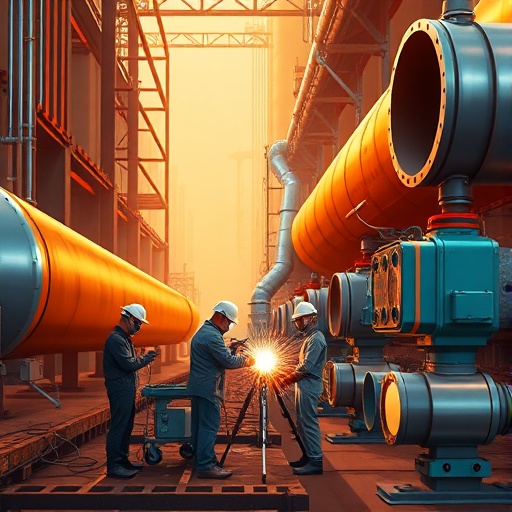
Operating temperature influences corrosion mechanisms at girth welds through its effect on electrochemical reaction rates and protective film stability. Higher service temperatures accelerate uniform corrosion and can destabilize passive layers on stainless steel. Weld metal chemistry must therefore match base metal corrosion resistance while accounting for dilution that occurs during pipeline girth welding. Residual stresses from the welding thermal cycle create local anodic sites that promote pitting if temperature and electrolyte chemistry align unfavorably. Coatings and cathodic protection systems supplement material selection to extend service life under varying thermal conditions.
Weld Inspection and Maintenance Strategies
Scheduled weld inspection programs combine ultrasonic testing with visual surveys to monitor girth weld condition throughout pipeline life. Early detection of corrosion or fatigue cracks allows targeted repairs before leaks develop. Maintenance crews review original construction temperature records because joints welded under extreme conditions may exhibit different long-term behavior. Inline inspection tools equipped with ultrasonic sensors provide continuous data on wall thickness and weld anomalies. These strategies integrate with risk models that factor material grade, operating temperature, and prior weld inspection findings to prioritize segments for detailed examination.
Impact of Temperature on Long-Term Weld Durability
Repeated thermal cycling in service imposes additional stresses on girth welds that were originally created under specific construction temperatures. Differential expansion between weld metal and base metal can enlarge existing micro-defects over decades. Plastic strain accumulation at the root and toe regions accelerates under high-temperature operation. Literature on pipeline failures shows that many incidents trace back to welds produced outside optimal thermal windows during construction. Ongoing monitoring through ultrasonic inspection and fitness-for-service evaluations helps operators manage these aging effects and schedule interventions that preserve overall system reliability.
See Also
- Mastering Pipeline Girth Welding Techniques for Maximum Strength
- Essential Skills Every Welder Needs for Successful Girth Welds
- Ultrasonic Testing Techniques to Enhance Girth Weld Evaluation
- Exploring the Importance of Weld Inspection in Pipeline Girth Weld Quality
- Corrosion Resistance in Pipeline Girth Welds Made from Stainless Steel